



Stage 1 Santiago-Negreira
The Fisterra and Muxía Way
Stage: Santiago - Negreira
The Jacobean itinerary to Fisterra and Muxía starts in the Praza do Obradoiro in Santiago, the goal of the other Caminos. It crosses the River Tambre by the Ponte Maceira and arrives in the town of Negreira, a town with a medieval origin.
Santiago de Compostela- Alto do Vento
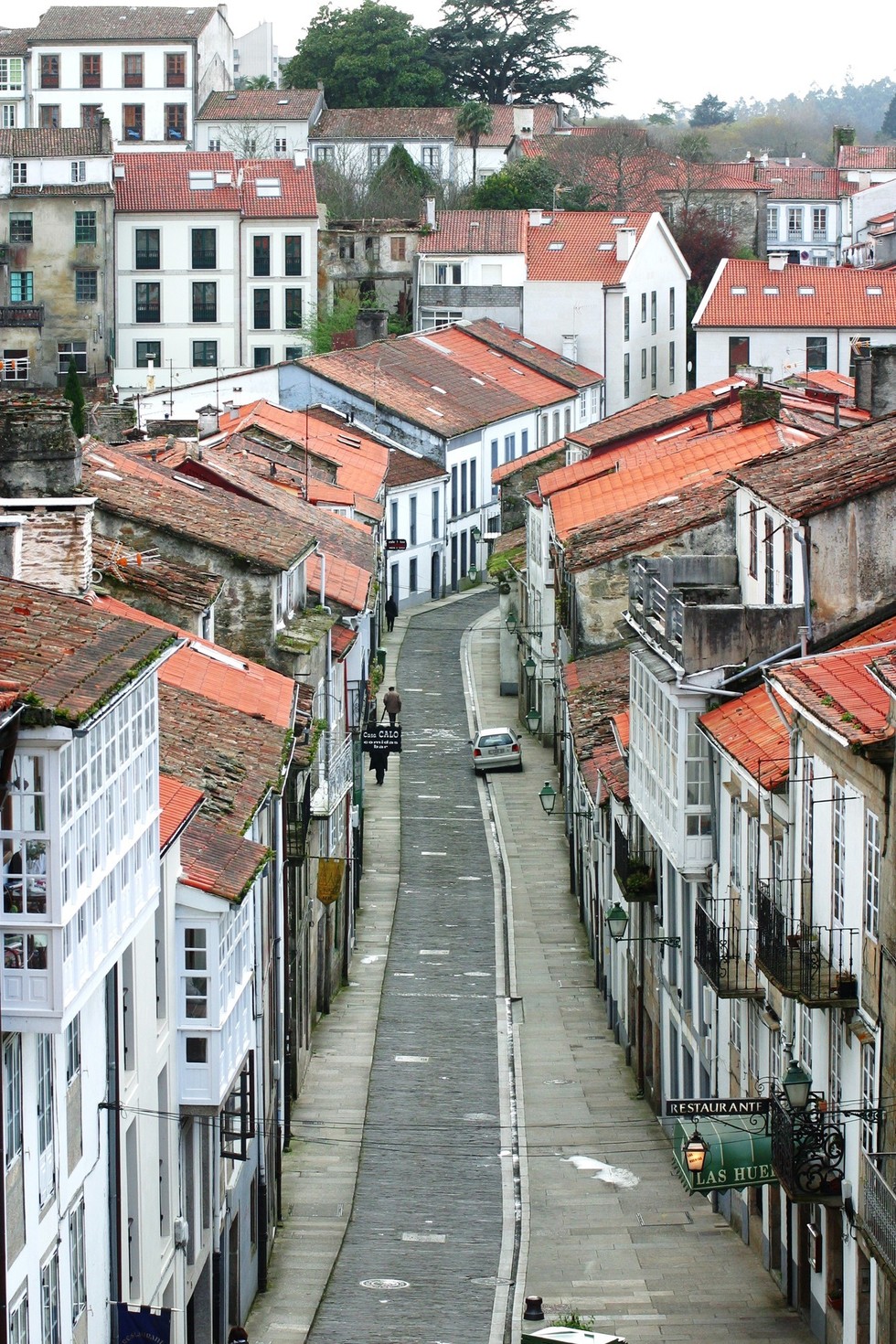
We leave the praza do Obradoiro and take the route of the now disappeared Gate of the Pilgrim or Gate of the Trinity, downhill by the costa do Cristo, and we continue along the genuine Rúa das Hortas, leaving the Church of San Frutuoso. A plaque at number 37 of this street reminds us that the expert in Galicia, artist, entrepreneur, intellectual and renovator of the famous Sagradelos ceramics, Isaac Díaz Pardo (1920-2012), was born here. We walk on along the Rúa do Cruceiro do Gaio and the Rúa da Poza de Bar and reach the carballeira (oak wood) of San Lourenzo, with its robust, inspiring, centenarian oaks.
We go through bucolic countryside to which the poetess, Rosalía de Castro, dedicated some of her finest verses. In her book, Follas novas (1880), she writes, “… aqués vellos carballos, / amostrando as súas raíces / cálva-las redondas copas…”.
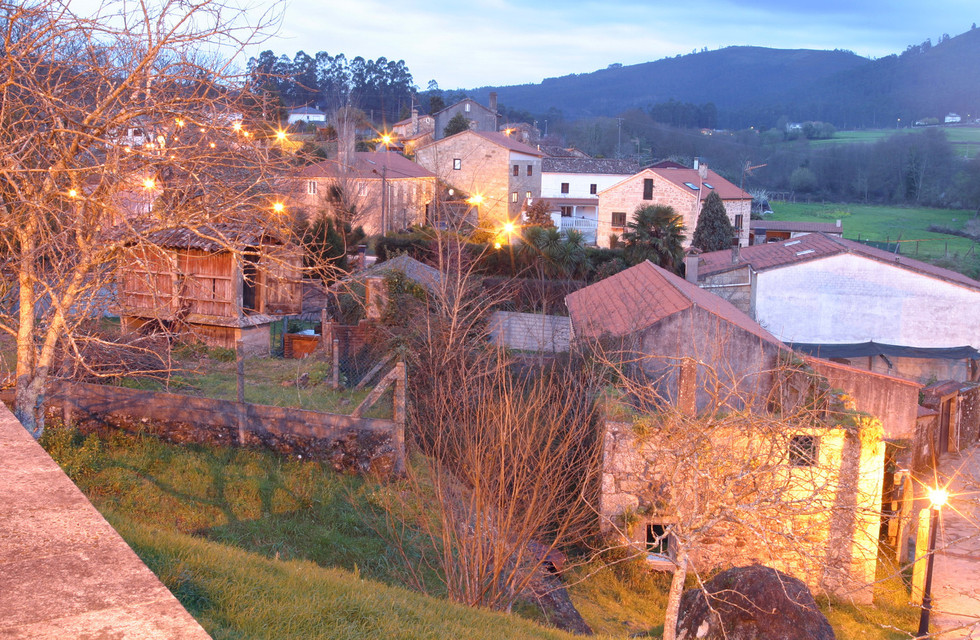
The western boundary of the estate of the Pazo de San Lourenzo leads us downhill to the course of the River Sarela, a beautiful tributary of the River Sar. The ruins of the past splendour of the tanneries remain on its banks. There was a thriving leather industry in Santiago until the last thirty years of the XIX century.
We leave the parish of Figueiras on the left, then pass through Villestro, Roxos and Alto do Vento, now in the municipality of Ames.
Santiago de Compostela - Alto do Vento
Alto do Vento- Mar de Ovellas
We reach the inviting town of Augapesada — with its outstanding medieval bridge with its semi-circular arch — and make the hard climb to the top of the Mar de Ovellas, with its magnificent views of the Valley of A Maía.
Alto do Vento - Mar de Ovellas
Mar de Ovellas- Ponte Maceira
We pass the towns of Carballo, Trasmonte, Reino and Burgueiros, and cross the River Tambre by the most outstanding bridge of this Camino, the Ponte Maceira.
Mar de Ovellas - A Ponte Maceira


Ponte Maceira- Negreira
On the other side is the region of A Barcala — which is important for its dairy and meat products — and the municipality of Negreira. After crossing the A Ponte Maceira, we take a tree lined path near the river and enter A Barquiña. Then we go up to A Chancela and, straight on, we reach Negreira, the largest town with over 2,000 inhabitants, which the pilgrim crosses before reaching the coast. At the entrance, we find the pazo de A Chancela, whose coat of arms shows the bridge which was destroyed and which stopped the advance of the soldiers pursuing the disciples of Santiago, according to Book III of the Codex Calixtinus.
The town of Negreira, of medieval origin, appears in literature. Among other authors, Ernest Hemingway refers to it in his novel For Whom the Bell Tolls. On crossing the town, we arrive at the hostel and, after passing the Chapel of San Mauro and the pazo do Cotón, we cross the river.