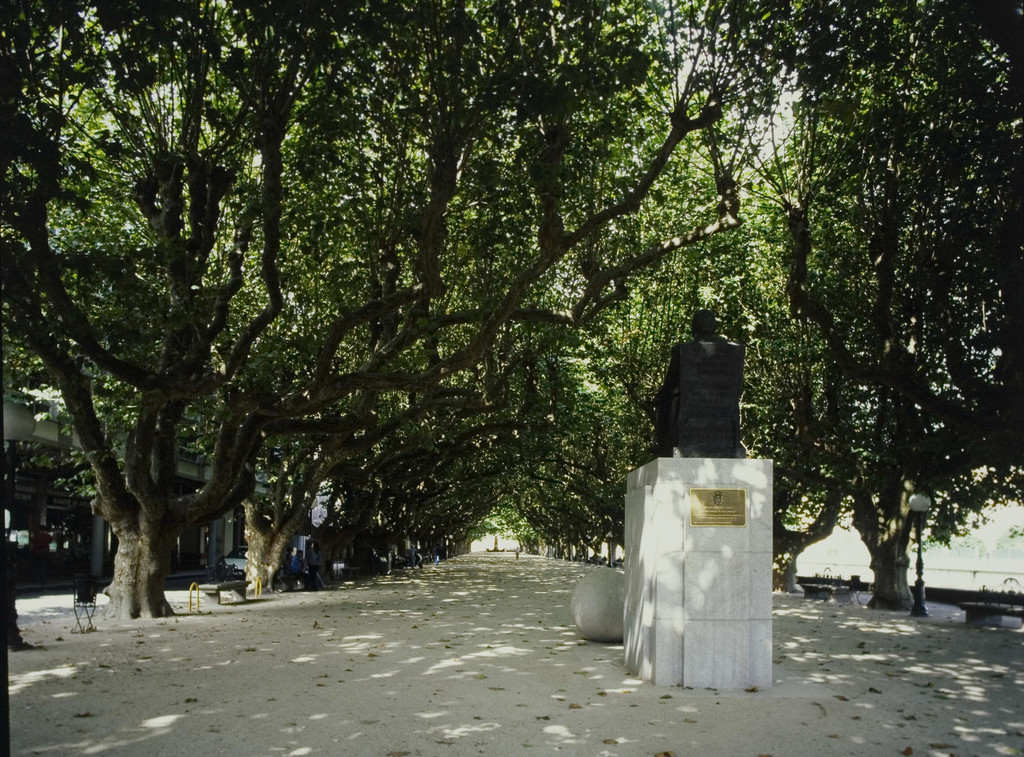
Paseo do Espolón in Padrón
The Mar de Arousa and Río Ulla Route
Stage: Padrón-Compostela
Padrón
Padrón, the birthplace of the Jacobean tradition, is an attractive, monumental town set in an extensive plainbetween the Rivers Ulla and Sar. Its name seems to come from the “Pedrón”, a Roman altar dedicated to Neptune which tradition links with the mooring place of the boat of the Apostle— the Stone Boat— which is today kept in the Church of Santiago.
Monumental Padrón provides us with multiple examples of its beauty. However the Padrón landscape is also attractive as it invites us to walk along the course of the River Sar until it flows into the River Ulla. Or we can go up to the Sanctuary of O Santiaguiño do Monte by a Way of the Cross with 125 steps. We can also enjoy the botanic garden (XIX century).
Padrón “extramuros” or rural extends towards Iria Flavia — which was a Roman city and an episcopal see until the XI century and here is located the Fundación Camilo José Cela—, to the slender Sanctuary of A Escravitude. It also extends towards Herbón — where the famous peppers grow — or in the direction of la Matanza — the house of Rosalía de Castro, or to Carcacía — the homeland of the medieval poet Macías O namorado—.


Rois
Rois belongs to the region of the Sar and has a little over 5,000 inhabitants. It is an inland municipality, but closely linked to the coast due to its proximity to two Rías: the Ría de Arousa and the Ría de Muros-Noia. It has a very varied landscape, which extends over a little less than one hundred square kilometres, from the monte de O Pedregal with its altitude of 600 metres to the fertile valley of the Sar and its tributaries, the Rivers Liñares and Rois.
In the parish of Ribasar there is an important archaeological site, the Castro Lupario, a fortress on a hill which is shared with the municipality of Brión. The remains of inner walls and defensive walls can be seen there. According to tradition, Queen Lupa, whom the disciples of Santiago had asked for a place to bury the Apostle, lived here.
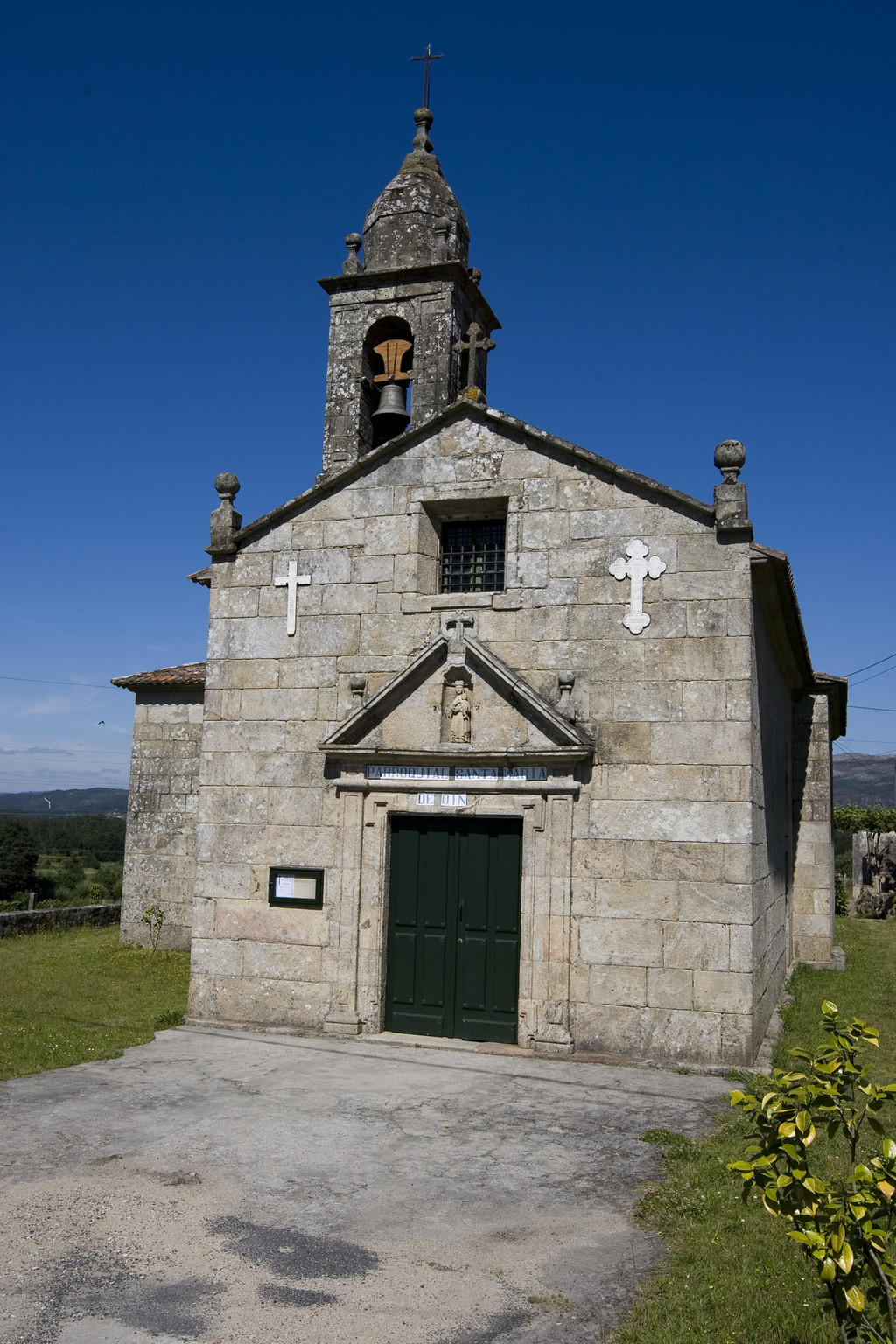
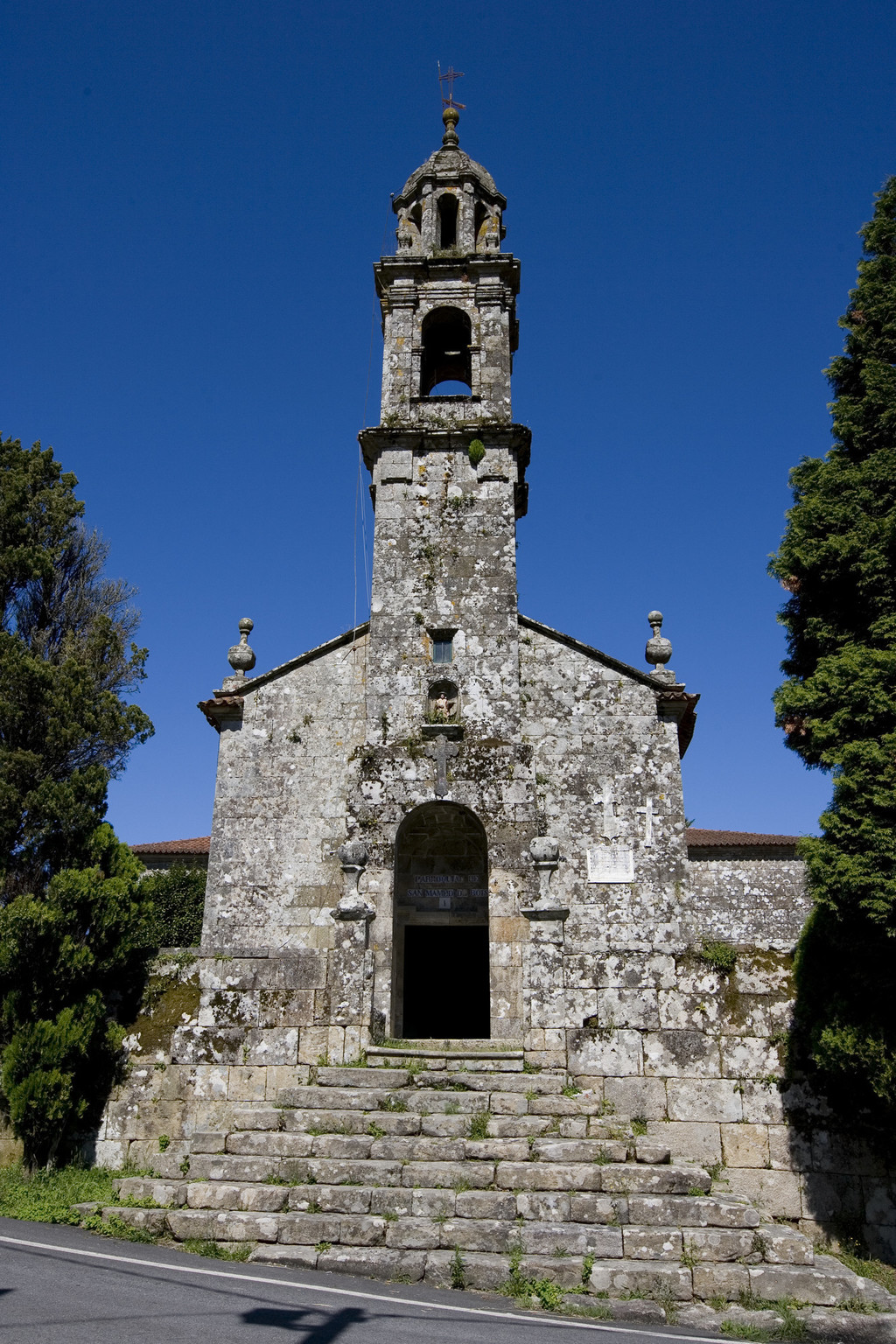
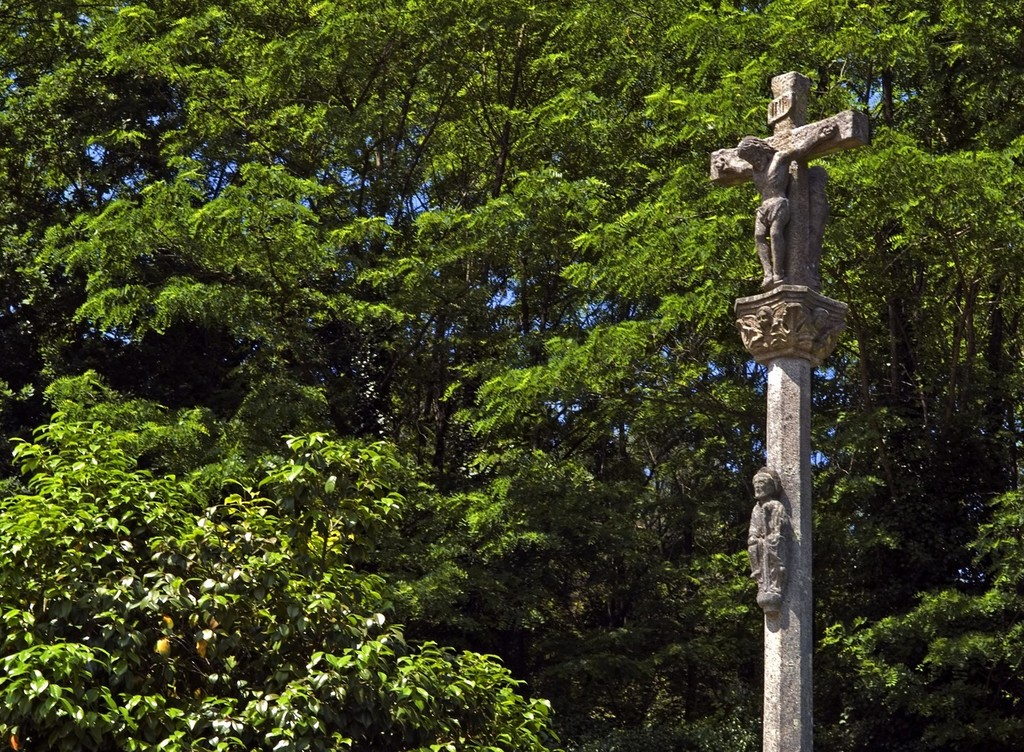
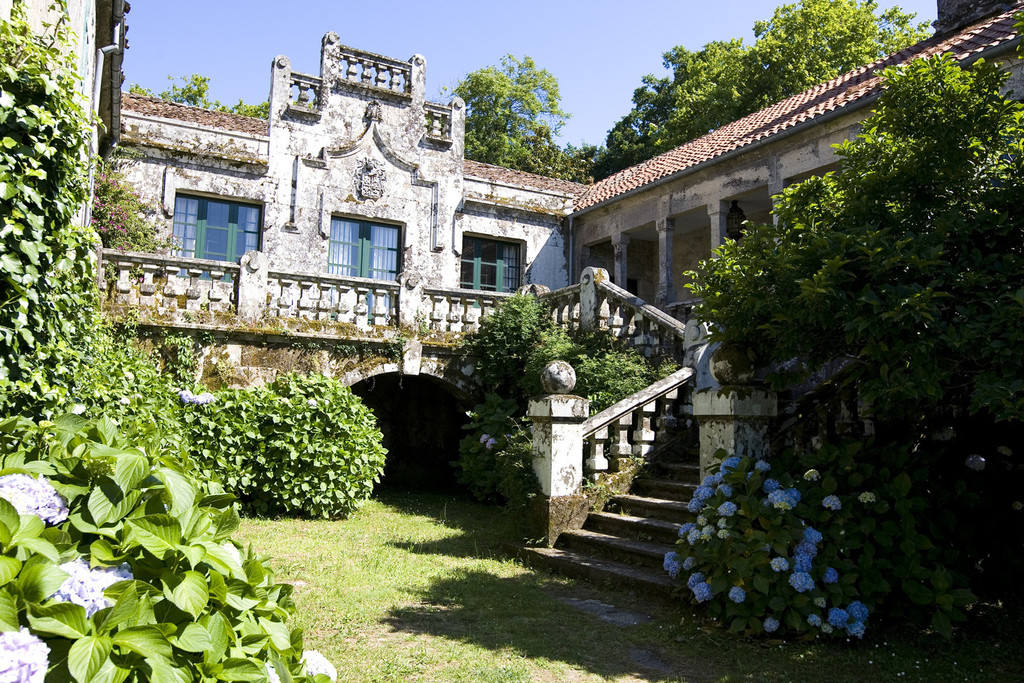
Rois also has varied ethnographic and monumental riches: pazos (manor houses), hórreos (traditional granaries), numerous Calvaries and interesting Baroque Churches, some with Romanic components.
Teo
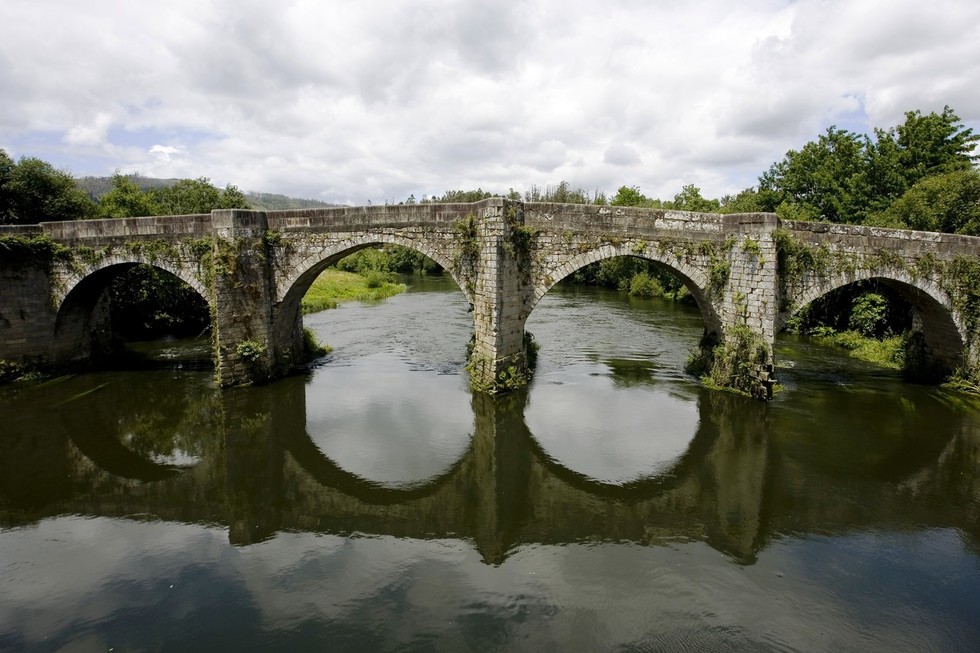
A municipality situated some 15 km from the capital of Galicia and highly influenced by such proximity to Compostela. Teo was a historical crossroads from Roman times. The old medieval road from Padrón to Santiago, for example, crossed the Rúa de Francos bridge.
Passing through Teo, the River Ulla leaves us memorable landscapes and areas particularly suited to fishing. As with many other municipalities in the region, Teo stands out for its valuable ethnography, with its petos de ánimas, or shrines to souls, dotted throughout the area and its cruceiros, or stone crosses, including the one in Francos, one of the oldest in Galicia.
Teo’s coat of arms depicts two crossed swords over a bridge. They recall the famous battle of Cacheiras, which occurred in this parish on 23rd April 1846, a symbol of the liberalists’ struggle — Commander Solís in Alliance with the new Galician nationalist movement — against the dictatorship of General Narváez. The general had to resign his post, but Solís and eleven of his officers were executed three days later in Carral.
Ames
In the Valley of A Maía, irrigated by the Rivers Tambre and Sar, and bordering with Santiago, lies Ames under the strong influence of the Galician capital, many of the workers in Compostela are registered in the census of its territory. It has a population of over 25,000 inhabitants and is the municipality with the highest birth rate in Galicia.
Another two Jacobean Caminos pass through Ames: the Portuguese — which passes through O Milladoiro, the “humilladoiro”, that is to say, where the pilgrims “humbled themselves” or knelt on seeing the Cathedral for the first time, which happened at the foot of the Chapel of A Madalena — and the Camino of Fisterra and Muxía, known here as the Camiño Real, and which has here A Ponte Maceira an outstanding bridge with five arches built over the River Tambre (XIV century).
Rosalía de Castro spent her early years in the village of Ortoño. In 1923 a group of specialists in Galicia founded the well-known Casa de Rosalía, the Seminario de Estudos Galegos, an institution in defence of the Galician culture.
Ames is surprising for its ethnographic and natural riches, and, at the same time, for its socio-economic dynamism which came about due to its closeness to Santiago. There are outstanding Pazos (Manor Houses) such as Leboráns (Trasmonte); Lens (San Paio), surrounded by a magnificent natural environment); Quintáns (very well conserved), Pazo da Peregrina (Bertamiráns) and Casa de Sandar (Agrón), among others. The Calvaries, shrines, fountains, dovecots, washing places and mills are also spread throughout its territory, which also has a river beach, the beach of Tapia (River Tambre), much visited by the people of Santiago.


- Santiago de Compostela
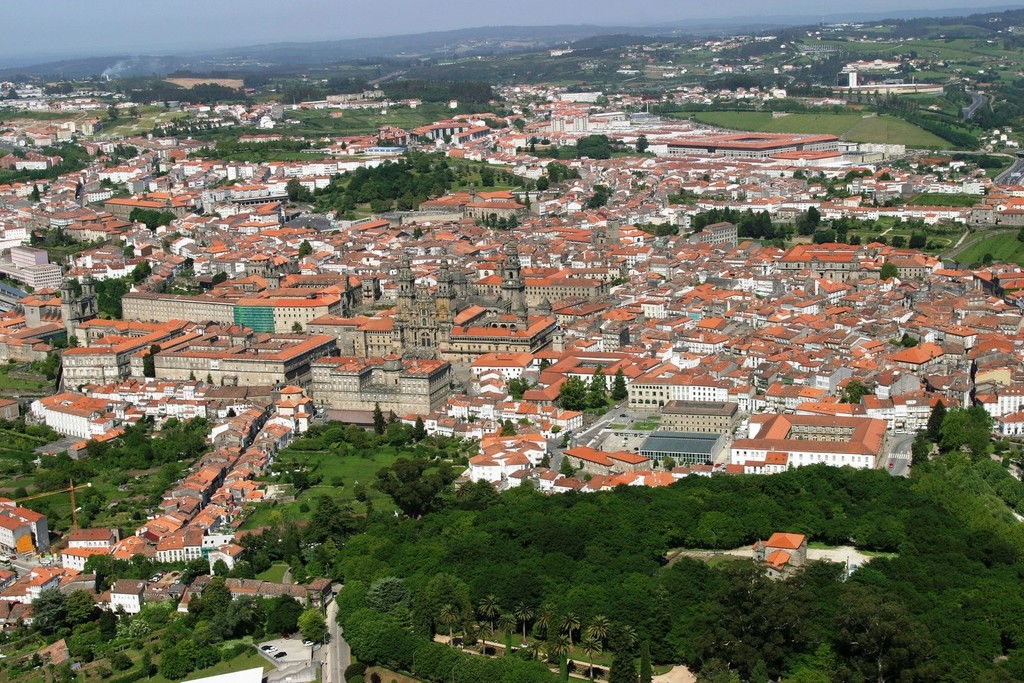
As we mentioned, the Mar de Arousa and River Ulla Route continues from Pontecesures to Santiago, along the route of the Portuguese Camino. We will linger with the description of the southern entrance to the Galician capital.
The ruins of the Castle-Fort of A Rocha Forte welcomes us shortly before reaching the urban area of Compostela. These are the remains (scarcely the layout) of the most emblematic medieval castle of the Bishopric of Compostela, occupied from the XIII to the XV centuries when it was destroyed by the Irmandiños.
We enter Santiago, either through the district of A Choupana, beside the hospital, in a flourishing residential area and with the Campus Vida of the Universidade de Santiago on our left, or we can choose the historical district of Conxo. Both alternatives converge in the Plaza de Vigo, where Rosalía de Castro was born.
The final metres of the Camino will take us along the Alameda — with its leafy carballeira (oaks) of Santa Susana— until we enter the historical zone by the Rúa do Franco and arrive at the Cathedral from the Plaza de As Praterías.