
The Way at the present time
One of the most international symbols of the Way of St. James is the yellow arrow, painted by hand on road surfaces, houses, walls and trees. Its origins are quite recent: it was created in 1984 on the initiative of O Cebreiro priest Elías Valiña, who put up these markers along the entire French Way, from France to Santiago.
The Public network of Pilgrims’ hostels was created in 1993. Today it is made up of 76 locations with more than 3,000 beds. It follows the model of the network of medieval hospitals established to meet the basic needs of pilgrims
Before setting out for Santiago, you will need to make a plan and assess your abilities. You may find it helpful to contact your local Friends of the Way of St. James association. Your primary consideration must be to ensure that you are in suitable physical condition and have the proper equipment.
The Way of St. James is always a positive choice, allowing each person to in some way find themselves, gain perspective and re-evaluate their own existence. Remaining open to all experiences, each of us must take a straightforward, relaxed approach to the journey.
We offer a selection of useful URLs, contacts and publications for planning your pilgrimage, including the Pilgrim’s Office network, Santiago Cathedral and Santiago Tourism, as well as Friends of the Way of St. James associations and lodging establishment websites.
Elías Valiña was one of the most important conservationists and promotors of the Way of Santiago as a pilgrimage and tourism route. In 1984 he undertook the signposting of the Way of Santiago, with yellow arrows from France
We must not forget that receiving the pilgrim is precisely one of the foundational characteristics of the Way of Santiago, which updates and renews the spirit of solidarity which has traditionally prevailed in Galicia.
They are open from 1 p.m. to 10 p.m. and the maximum stay will be one night only. They have hot water and disposable bed linen.
To request the Compostela on arrival at the goal of our pilgrimage if we have travelled 100 kilometres on foot or on horseback or 200 cycling.
This option has its advantages such as being able to know places of interest near the route or make exceptional unhurried stops.
It lets you walk through stages along the different historical paths that through various centuries have reached Santiago de Compostela, sleeping each night in a different rural tourism house.
How to travel the Way
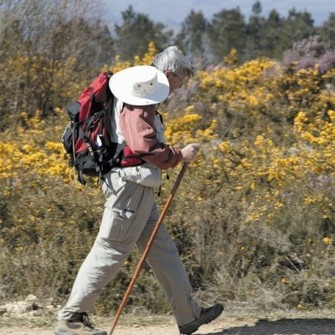
Our prime considerations must be adequate physical preparation and good equipment
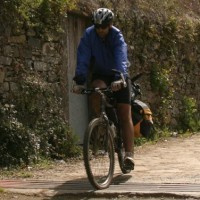
It is preferably advisable to travel in company, be especially careful with the traffic and always comply with the rules of transit
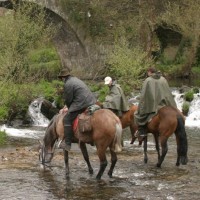
The pilgrimage on horseback requires special planning. In 2022 there were 545 pilgrims on horseback