Stage Padrón-Santiago
The Portuguese Way
Stage: Padrón-Santiago de Compostela
We cross the valley of the poetic River Sar, the Sanctuary of A Escravitude and we reach the top of O Milladoiro- the “humilladoiro”, that is, the place where pilgrims “humiliated” or knelt when they saw the cathedral for the first time. Here Compostela can already be breathed.
Padrón- A Escravitude
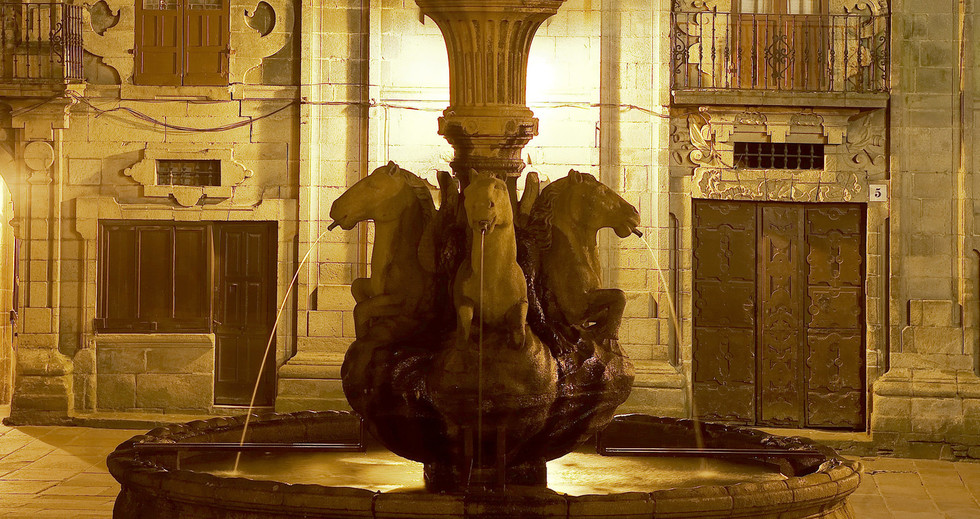
The route departs along Dolores Street, crossing the Sar River before coming to Iria Flavia, today the municipality of Padrón. This was once a Roman city and later an episcopal see until the 11th century. After passing the foundation of Nobel Prize in Literature winner Camilo José Cela (who is buried opposite, in the cemetery of Santa María Collegiate Church in Adina), the route crosses the N-550 (we can take the way that diverts us to the right to avoid traffic). The Sar Valley is home to traditional small village such as A Pousa, O Souto, O Rueiro, Cambelas and Anteportas.
Padrón - A Escravitude

A Escravitude- Milladoiro
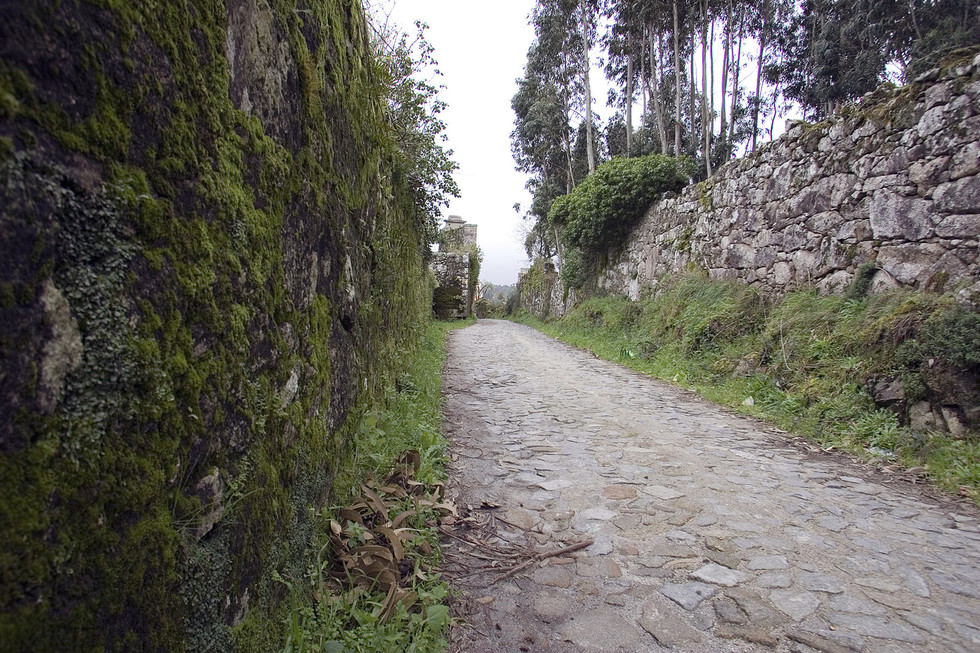
We come to the Sanctuary of A Escravitude. Behind it lie the valleys of Padrón and magnificent views of the lands of Amaía. The route then descends to A Angueira de Suso, followed by O Faramello and the pilgrim hostel at Teo (another accommodation option). It then climbs up to Rúa de Francos and then Osebe.
A Escravitude - O Milladoiro

Milladoiro- Santiago de Compostela
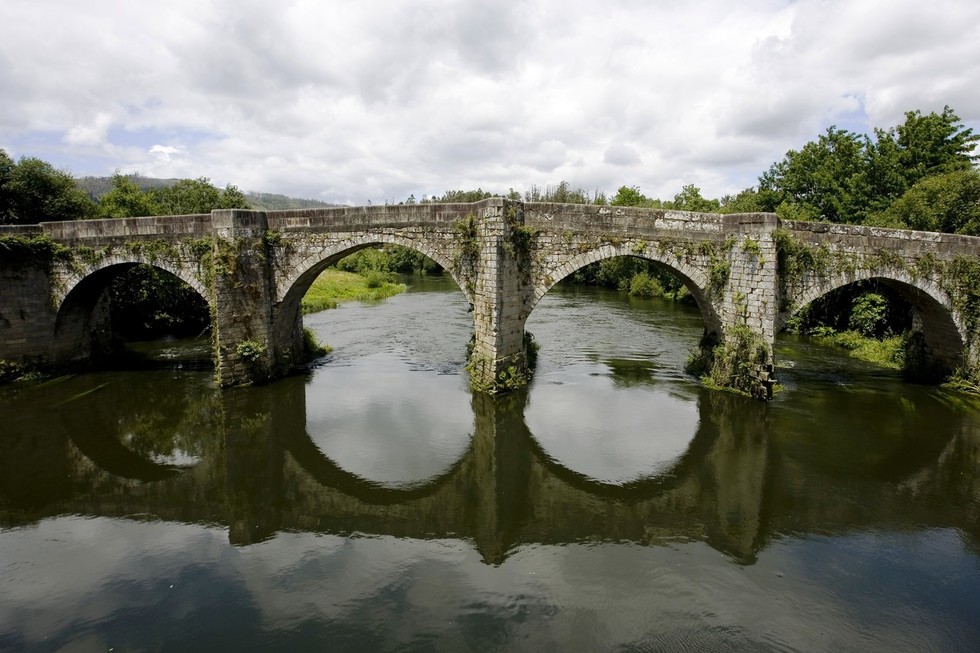
In O Milladoiro–the humilladoiro where pilgrim ‘humbled themselves’, kneeling upon catching sight of the cathedral for the first time–Compostela begins to pervade the atmosphere. We descend, first coming to A Rocha Vella on the Sar River, which we cross at A Ponte Vella (Old Bridge). The route turns right and continues upstream, following a path running parallel to the course of the river until we come to a fork. Here there are two options, both clearly signed: continue straight on through the neighbourhood of Santa Marta de Abaixo to Santa Marta Chapel and Rosalía de Castro Street, or turn right and go through the historic Conxo neighbourhood, followed by Sánchez Freire and García Prieto streets and Vilagarcía Avenue. The two options meet at Rosalía de Castro Street where it reaches Vigo Square.
The route enters the old quarter through A Porta Faxeira and O Franco Street. The traditional entrance to the cathedral for pilgrims on the Portuguese Route is through As Praterías Square.