It is not possible to understand Galicia’s capital without its cultural history. It has a number of important institutions, including the Cidade da Cultura (City of Culture) and a prestigious university with over five centuries of history
Santiago is an extremely dynamic culinary destination. Proof of this is the city’s authentic Mercado de Abastos (food market), the second most visited location, after the cathedral
Some twenty parks and gardens form a true green belt. They include San Domingos de Bonaval Park a former cemetery transformed by architect Álvaro Siza and landscapist Isabel Aguirre
The Pazo de Oca (A Estrada), with spectacular gardens, and Pazo de Santa Cruz de Ribadulla (Vedra), whose highlights include camellias and ancient olive trees
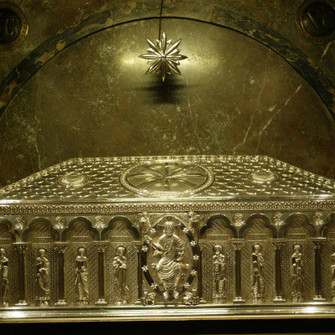
The city of Santiago was founded and has grown up around the Apostle’s tomb. The pattern of its streets and squares, its place names and main historic buildings – emerging from the epicentre designated by the cathedral – are all evidence of this. Everything refers to the Way of St. James. The energy of this pilgrimage can be felt in every historic spot.
It is not possible to understand Galicia’s capital without its cultural history. It has a number of important institutions, including the Cidade da Cultura (City of Culture) and a prestigious university with over five centuries of history, as well as more modest yet highly dynamic organizations in the various neighbourhoods that are active throughout the year. Culture is the city’s raison d’être.
Santiago is an extremely dynamic culinary destination. Proof of this is the city’s authentic Mercado de Abastos (food market), the second most visited location, after the cathedral. All of Compostela invites visitors to relax and sample tapas at its sidewalk cafés, bars and restaurants.
Santiago de Compostela is among the peninsula’s cities with the most square metres of parks and gardens per inhabitant. Alameda Park and its English oak wood are quintessential examples of the city’s many extraordinary green areas.
Around the city, the nearby municipalities boast enough options and attractions to entice visitors to stay just a little longer. We offer a few recommendations for sights, natural getaways and local gastronomy in the area around Santiago.
This portal uses essential first-party cookies for its proper functioning, as well as third-party cookies for analytical purposes. You can find more information in the cookie policy
Cookie configuration
You can use these buttons to customise the services you wish to use on this portal.

 Language