

 Language


SANTA MARÍA DE FERREIRA

In The Way of Saint James





Location
Parish: Ferreira de Pantón (Santa María)
Place: A Vila do Mato
27430 Pantón - Lugo
Coordinates: 42º 30' 30.9" N - 7º 37' 12.9" W
Phone: +34 982 456 155
Description
The Bernardine Nuns Monastery, firstly of the Benedictine order and later Cistercian, has always been reserved for women and has the curious record of being the only one in Galicia that has maintained its function from its creation to the present. It remained unaffected by Mendizábal's Disentailment Act in the 19th century and continued its normal activities.
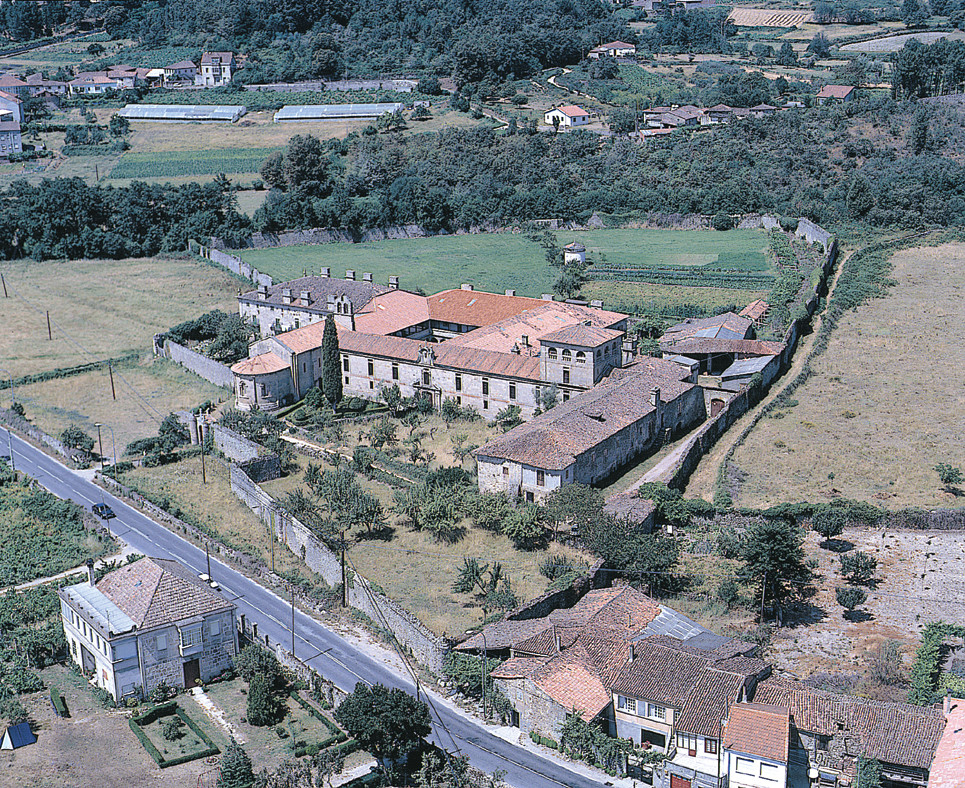
This architectural ensemble was built in several stages over five centuries. The Romanesque church dates back to the 12th century. The cloister was built in the 15th century, whilst the rest of the elements were built in the 18th century.
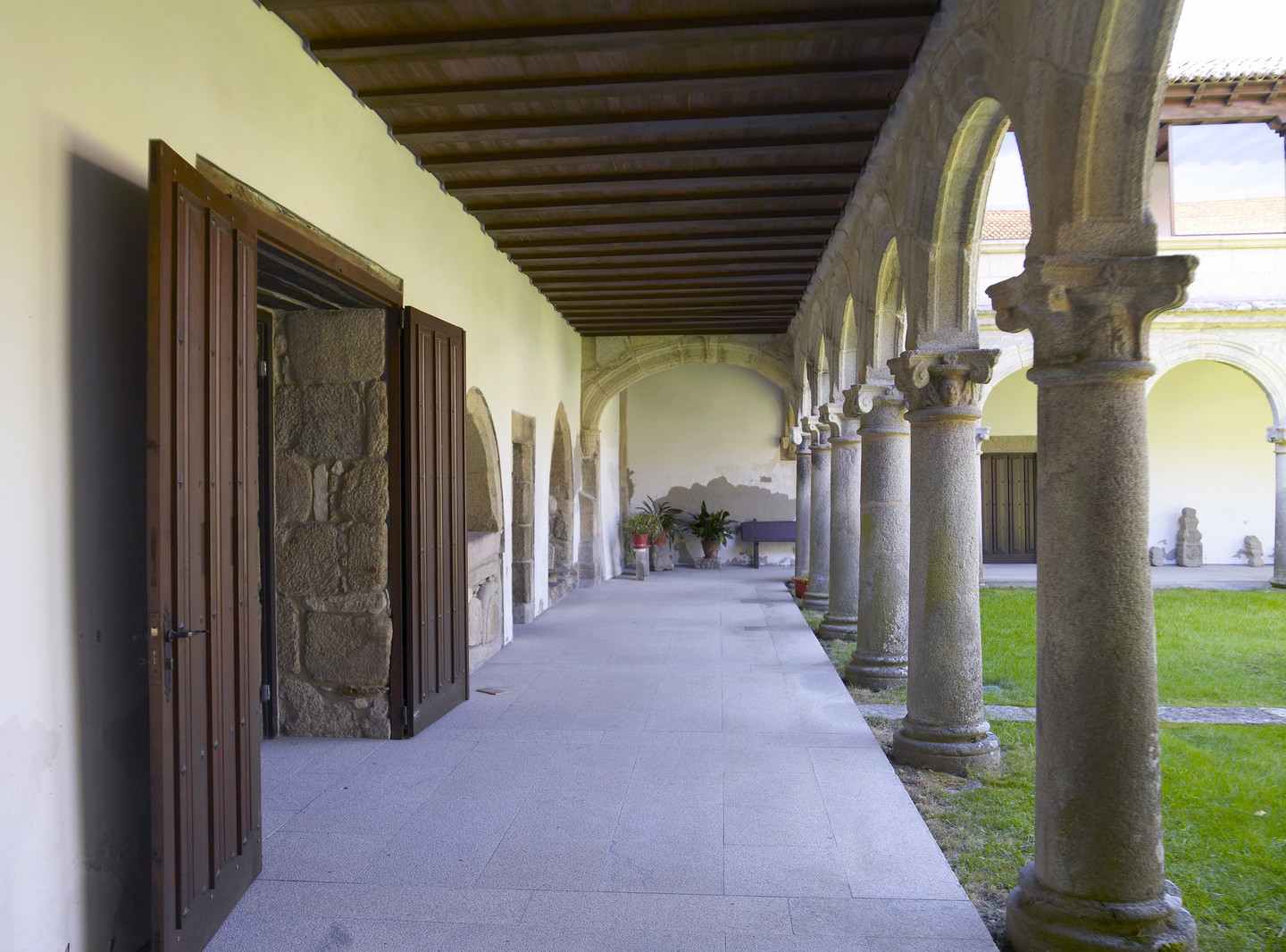
It is surrounded by a solid wall. Above the access door to the premises, which is framed by two buttresses acting as pillars, we can see the coat of arms of the Castilian Cistercian Order. The monastery, a two-storey building constructed in ashlar granite, has a cloister in two sections, with semicircular arches supported by Alcarria-style capitals. This space houses the tomb of Countess Fronilde, Abbess of the monastery during its golden age in the 12th century.
The church was built forming a right angle with the monastery's façade. It is of rectangular design, with a single nave and a semicircular apse. Amongst the figures to be found in its interior a polychrome wooden sculpture of the Virgin with Child is worth mentioning. We can also visit the tombs of Diego de Lemos, leader of the Irmandiños (Brotherhoods) Revolts, and his son.
To round off our visit, guidebooks on the village as well as confectionery made by the nuns can be acquired at the monastery.
This architectural ensemble was built in several stages over five centuries. The Romanesque church dates back to the 12th century. The cloister was built in the 15th century, whilst the rest of the elements were built in the 18th century.
It is surrounded by a solid wall. Above the access door to the premises, which is framed by two buttresses acting as pillars, we can see the coat of arms of the Castilian Cistercian Order. The monastery, a two-storey building constructed in ashlar granite, has a cloister in two sections, with semicircular arches supported by Alcarria-style capitals. This space houses the tomb of Countess Fronilde, Abbess of the monastery during its golden age in the 12th century.
The church was built forming a right angle with the monastery's façade. It is of rectangular design, with a single nave and a semicircular apse. Amongst the figures to be found in its interior a polychrome wooden sculpture of the Virgin with Child is worth mentioning. We can also visit the tombs of Diego de Lemos, leader of the Irmandiños (Brotherhoods) Revolts, and his son.
To round off our visit, guidebooks on the village as well as confectionery made by the nuns can be acquired at the monastery.
Styles
Architectural style: Neoclassical
Architectural style: Gothic
Architectural style: Romanesque
Religious order
Cistercians
Statement
Good of Cultural Interest
Access
From Escairón, take the road to Ferreira from Pantón, about 12 Km away. There, take the LU-603 towards Monforte, and at the exit from the town, past a bridge, the monastery stands 300 metres ahead.
The Ways of St. James
The Winter Camino